
Surveillance is Key
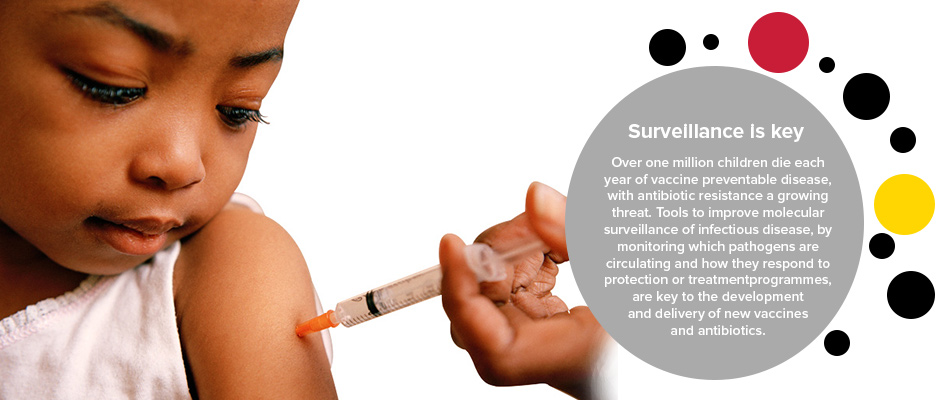
Infectious diseases, caused by pathogens such as bacteria,viruses, fungi or parasites, may be tackled by a number of strategies. These include vaccines to provide protection against disease and drugs to kill the infectious agent. However, interventions such as these may impact on the circulating pool of pathogens by driving evolution through natural selection, potentially removing specific sub-populations or through acquiring drug resistance. Therefore, monitoring which pathogens are circulating, and any response to prevention or treatment programmes, is essential for cost-efficient and effective delivery of new or existing vaccines and drugs.
Inside Information
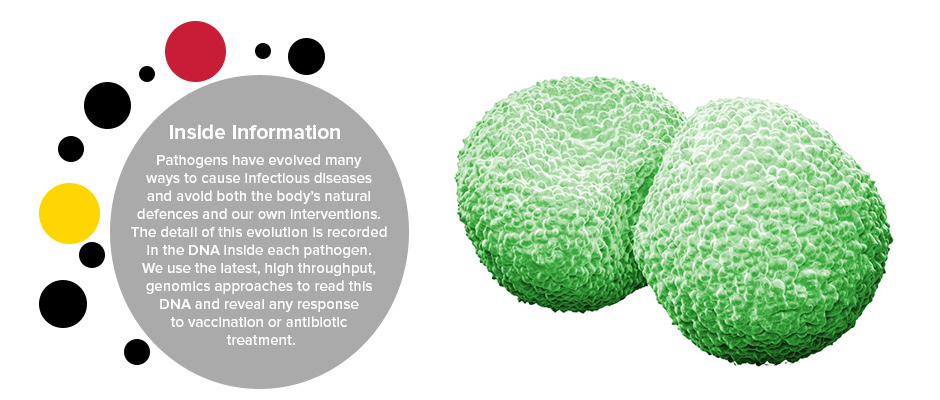
Pathogens have evolved many ways to cause infectious diseases, avoid the body’s natural defences and overcome interventions, such as vaccines or drugs that aim to prevent or treat disease. The record of this evolution is encoded in the DNA inside each pathogen, incorporated within the genes and mutations of the genome. By using the latest genomics technologies to determine the DNA content of the pathogen, a comprehensive and detailed analysis of the genetic information is possible. Assessing the genetic make-up of the pathogen may reveal evidence of known mechanisms, or clues to novel adaptations, associated with vaccine escape or antibiotic resistance.


Clinical Insights
Clinical samples, such as nasal swabs, typically contain a huge variety of human cells, other colonizing commensal microbes, and even different strains of the same pathogen. Analysis of DNA extracted from these highly complex mixtures can be challenging, as the pathogen DNA of interest represents only a small proportion of the total DNA present. Extracting clarity from the complexity of these samples is important, to monitor the impact of any vaccine or drug interventions on the wider microbial population and also to gain further insights into the biology underlying any changes detected in specific pathogens.
A New Vision
BUGS Bioscience was created as a joint spin-out venture between St George’s, University of London and private donors with the common aim of delivering a global platform for molecular surveillance of infectious diseases. We operate as a technology start-up comprising a creative and motivated team of molecular biologists, mathematicians and software engineers. We are committed to providing organisations involved in vaccine development and roll out, both commercial and NGO, with the highest levels of customer service with the not-for-profit ethos that any surpluses are reinvested in further development of our platform.